
Georgia Sports Hall of Fame induction ceremony: Stellar resumes, homeless to the Olympics, remarkable efforts, dynasty, and some epic accomplishments


By Michael A. Lough
The Sports Report
centralgasports@gmail.com
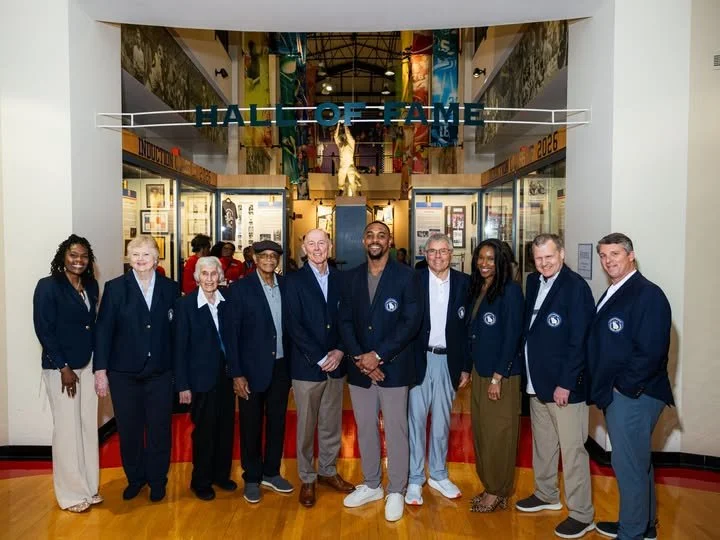
The most familiar names to the largest number in the audience belonged to the college baseball coach, the college and pro defensive back, and college and pro kicker.
Three more who took the podium established their legacies not far from the gathering.
But the stories and resumes from a former gymnast and track star were the ones that will likely stick in the heads of the several hundred on hand at the Macon City Auditorium for the 2026 Georgia Sports Hall of Fame induction ceremony.
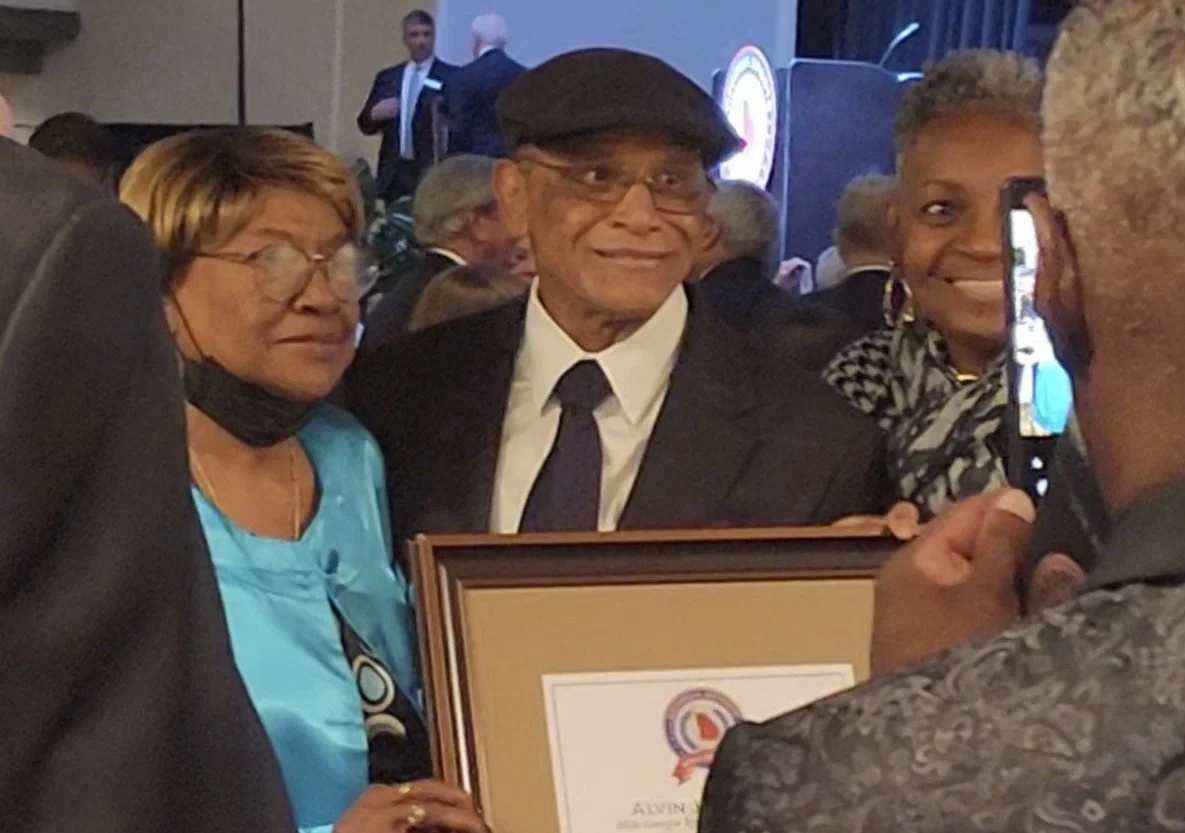
In between the quiet thanks of Northeast basketball and track coach Alvin Copeland, the remarkable record of Bunny Fuller Harris and the Taylor County girls basketball team as well as Danny Hall, Morgan Burnett, and John Kasay came Dr. Leah Brown and Chaunte Lowe.
Talk about listening to the bios and life stories and feeling mighty inferior.
Before she took the microphone, Brown had already won the audience that heard of her extensive gymnastic accomplishments at Georgia, and so much more. Like being on the student athletic council, or membership in the Omicron Delta Kappa, Blue Key and Palladia honor societies. Or winning the Arthur Ashe Award for Black Issues in Higher Education.
It didn’t stop there.
She joined the Navy and got her medical degree at Ohio State, which led to an internship at the Navy Medical Center in San Diego, and then a stint as battalion surgeon at Camp Pendleton before deployments to Iraq and Afghanistan, and, well, few standing ovations have come so quickly and uniformly as when the list was finally done and Brown took to the stage.
Her presentation was just as impressive, with the firmness and confidence and humility befitting somebody with that staggering background.
“Excellence is not accidental,” she said. “In gymnastics, in most all sports, you can't rush the process. You can't skip progressions. You can't argue with gravity, and fundamentals matter. The details matter. The team matters. And perhaps most importantly, character matters.”
She credited everything about sports.
“Gymnastics was my first classroom,” Brown said. “It taught me that excellence is not an act. It's discipline. It's repetition in a chalky hot gym. It's blistered bleeding hands. And one more tumbling pass when your legs are shaking.
“It's the quiet decision to try again after you failed, crashed, and fell. The attributes that made me a successful gymnast - focus, resilience, courage under pressure, and attention to detail - did not stay in the gym.”
Clearly.
Lowe’s video presentation inspired some chuckles when it showed her dancing and grooving briefly after particularly big jumps during her days at Georgia Tech that preceded competition in four Olympics.
She grew up in California, but on induction night, 85 miles from her college alma mater, she was home.

“Sometimes you have the family you're born with¸ and sometimes you have the family that you choose,” she said. “And when I came here to Atlanta, Georgia … I found a home.”
Lowe, who repeated a little of her celebratory footwork while taking the stage, needed one. After she finished first in her initial 400-meter run as a youth, she raced home to share the news.
“I see that all of our belongings are on the front lawn,” she related. “ And I'm like, ‘Oh, I guess we're having a yard sale.’ I walk into the house and my mother's crying on the floor. We had been evicted.
“And in that moment, I remember wanting to give up on everything. I wanted to give up on my dream. I remember feeling a sense of hopelessness.”
Soon, she saw Olympic legend Jackie Joyner-Kersey suffer an injury during a race and be picked up by her husband. A few days later, she won the bronze in the long jump, and said that meant as much as any gold medal because of what it took to earn it.
“In that moment, I realized that I did not have to give up on my dream,” she said. “Instead, I knew I had to find a way to get to this place called Atlanta, Georgia.”
She related before three of her Olympic trips, she gave birth. One time, before a practice jump, she had to leave the infield to breastfeed her crying daughter.
“You never give up,” she said. “You never quit.”
Life after track tested that belief.
“I ended up having a double mastectomy and six months of chemotherapy,” Lowe said. “I didn’t quit, and because of what you guys have done for me, I was able to ring that bell.”
And she pulled out and rang the bell that symbolizes completion of a level of cancer treatment.
“Thank you for being the inspiration, for understanding that sports is the inspiration that causes someone to go from homelessness to being able to stand up here,” Lowe said. “I've traveled the world, I've inspired people, and I can give other people hope because of what you guys do.”
Copeland, Harris, and golf teaching pro Ray Cutright were the inductees from Central Georgia.
Harris was part of a Taylor County dynasty led by coach Norman Carter (Class of 2008), a dynasty that included 132 straight wins from 1967-72.
“When I think back to that small gym in Taylor County, where my basketball career began. I'm just amazed,” she said. “How did a group of ordinary teenage girls become such an extraordinary team? I'm thankful to God that I came along at the right time to play in every game from my freshman year to my senior year.
“(Carter) instilled in us high school girls the knowledge of basketball fundamentals, the teamwork that made it possible and the belief that we could get the job done even in the face of adversity,” said Harris, who went on to play at Middle Georgia junior college and then Georgia. Harris said.
She pointed out former teammates Sissy Martin, Judy Bland, Sandra Arnold, Kathy Davis, and Kathy Gardner on hand.
“These ladies and I set a state record that will probably never be broken,” Harris said. “I accept this tonight, I do so on behalf of every Taylor County Lady Viking who laced up her shoes, and in honor of Coach Norman Carter.”
Copeland was never the loudest coach on the sideline or track infield, so it was knowledge and consistency that led to so many state basketball and track titles. One reason? To compete in one, you better be ready to go in the other.

“Anybody that could run faster than you, they will always beat you,” he said in his soft-spoken manner. “That’s what I always tried to (teach) at Northeast High School. We made them run. The basketball team, they had to run, even when it was cross country season.”
Copeland dismissed the belief that you had to run track to play basketball.
“Those that played, they were going to get in the gym sometime or another and show me what they could do,” he said in his short acceptance speech. “It has been a great ride, all those years at Northeast High School. I couldn’t have been in a better place.
“I want to thank all the athletes that’s here tonight. They have just been an inspiration to my life, and now they inspire me because they write the letters and things back, saying, ‘Coach, I don’t know what I would have been doing in life if it had not been for you.’
“That is always something that I can always remember.”